
Reservation
+91 - 8493894545
Blogs
How to Safely Acclimatize in Leh: The Complete First 48-Hour Guide
By The Bodhi Tree Leh, Leh Ladakh | Updated March 2026
You’ve landed at Kushok Bakula Rimpochhe Airport, one of the highest commercial airports in the world at 3,256 metres. The air is thin. The sky is impossibly blue. The Himalayan peaks surround you in every direction. And your body — used to sea-level life — is quietly trying to figure out what just happened. Welcome to Leh — and this is your essential guide on how to acclimatize in Leh safely.
Acclimatization is the single most important thing you can do in your first 48 hours in Ladakh. Get it right, and you’ll spend your entire holiday exploring monasteries, gazing at turquoise lakes, and breathing in the silence of the mountains. Get it wrong, and altitude sickness Ladakh can take you off your feet for two to three days — or worse, require emergency descent.
This guide will walk you through exactly what to do — hour by hour — so that your arrival in Leh is the beginning of something extraordinary, not a medical ordeal. Consider this your complete Leh altitude guide and practical handbook for safe travel Ladakh.
What Is Altitude Sickness — And Why Does Leh Trigger It?
Leh sits at 3,524 metres (11,562 feet) above sea level. At this altitude, the air contains roughly 35% less oxygen than at sea level. Your body, quite literally, does not know how to breathe normally here — at first.
Altitude sickness, or Acute Mountain Sickness (AMS), occurs when you ascend too quickly for your body to adapt. Symptoms can appear within 2–12 hours of arrival and typically include:
- Persistent headache (the most common early sign)
- Nausea or loss of appetite
- Dizziness or lightheadedness
- Fatigue and weakness beyond normal travel tiredness
- Disturbed sleep or shortness of breath at rest
The good news: AMS is almost entirely preventable with a sensible first 48 hours Leh acclimatization plan and proper AMS prevention Leh strategies. Here is exactly what that looks like.
The First 48 Hours: Your Hour-by-Hour Acclimatization Plan
Hours 0–6: Land, Rest, Resist the Temptation
The moment you land, slow down.
Do not rush to carry your own luggage. Do not jog across the tarmac for a photo. Do not be
embarrassed to move slowly — every experienced Himalayan traveler knows this is the
wisest thing you can do, and one of the most important Leh acclimatization tips.
What to do:
- Move slowly and deliberately from the aircraft to the terminal
- Allow hotel staff to handle your luggage
- Go directly to your accommodation and lie down for 2–3 hours — this is non-negotiable and key to what to do in first day in Leh
- Keep your windows open for fresh mountain air, but stay warm
- Drink 2–3 glasses of water immediately upon arrival (dehydration amplifies altitude sickness)
What NOT to do:
- Do not go sightseeing, even for "just an hour"
- Do not have alcohol — it accelerates dehydration and worsens symptoms
- Do not take sleeping pills or sedatives, which can suppress breathing
- Do not have a large heavy meal — eat light
At The Bodhi Tree Leh:
Our team will have fresh herbal tea and light snacks ready for your arrival. We ask all guests to rest for the first two to three hours — we’ll have your room prepared so you can walk in and lie down immediately. It’s not just hospitality; it’s mountain medicine at a boutique hotel Leh designed for altitude comfort.
Hours 6–12: The Gentle Reawakening
If you've rested well, you may begin to feel human again. This window is for slow, gentle activity — nothing strenuous.
Suggested activities:
- A slow, 15–20 minute walk in the hotel garden or immediate neighbourhood — flat ground only
- Sit in the sun. Leh's sunlight at altitude is powerful and restorative.
- Have a warm, light meal: soup, rice, dal, bread — avoid rich, oily food
- Drink plenty of fluids: warm water, herbal tea, lemon honey water. Aim for 3–4 litres of water over the full day
- Avoid caffeine — it dehydrates at altitude
Watch for warning signs
If you develop a severe headache that doesn't improve with rest, persistent vomiting, or confusion, contact your hotel immediately. These can be signs of more serious altitude illness requiring medical attention.
A mild headache is normal and manageable. Most guests find it passes with rest, water, and
time — a sign your body is adjusting well as per this Leh altitude guide.
Hours 12–24: Orientation, Not Exploration
By the evening of your first day, most guests feel noticeably better. This is a good sign — but it’s not a green light for Pangong Lake.
What you can do:
- Explore the immediate neighbourhood on foot — the Leh market, nearby lanes
- Visit Shanti Stupa if you feel well (it's a short, slow climb — take your time)
- Have a proper meal — your appetite should begin returning
- Sleep with your room at a comfortable temperature; avoid overheating
Sleep at altitude:
Many guests find that the first night in Leh involves vivid dreams or light, disturbed sleep. This is normal. Your breathing naturally becomes irregular at altitude during sleep (a phenomenon called Cheyne-Stokes respiration). Do not be alarmed — it settles by night two or three.
Hours 24–48: Build Confidence, Don’t Rush
By Day 2, you should feel substantially more like yourself. Energy returns, appetite normalises, and the headache (if any) fades.
What you can now do:
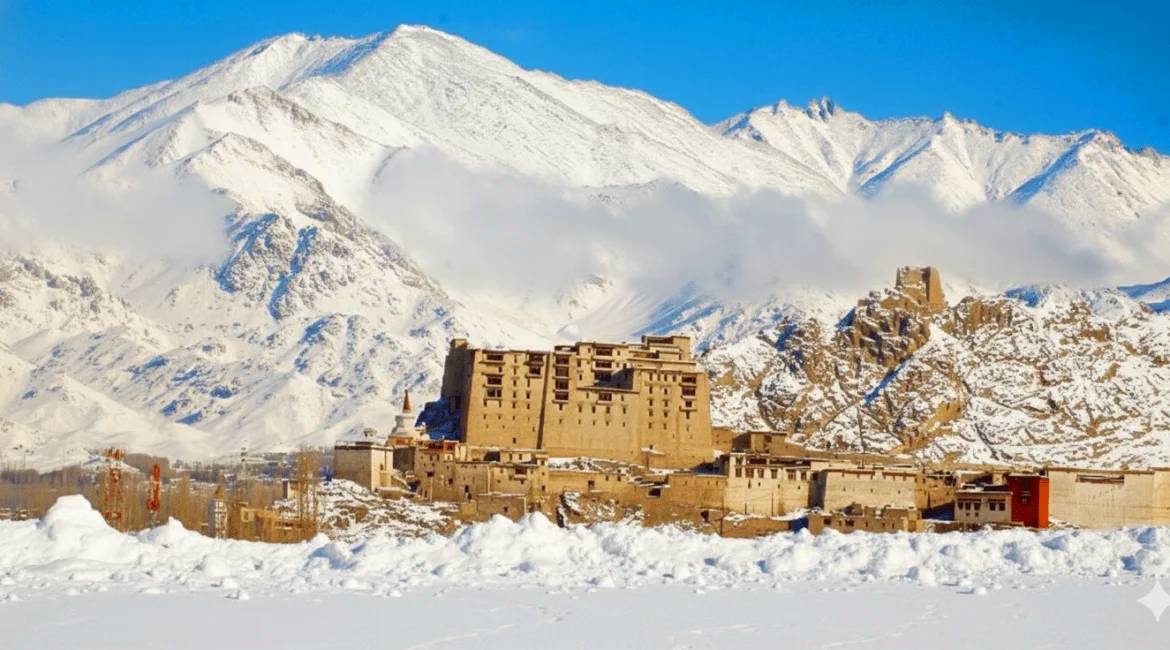
- Explore the Leh Palace and the old town — mostly flat walking
- Visit Hemis Monastery (an hour’s drive) — a seated visit, no strenuous walking required
- Take a gentle drive to Hall of Fame Museum or along the Indus River
- Enjoy breakfast at altitude — your first full Ladakhi meal: Skyu, Thukpa, butter tea
Still avoid until Day 3+:
- High-altitude excursions: Khardung La (5,359m), Chang La (5,360m), Pangong Lake (4,350m)
- Strenuous trekking, river rafting, or mountain biking
- Any activity requiring sustained physical exertion at higher altitude
Key Acclimatization Rules — The Short Version
For travelers who want just the essentials and quick Leh acclimatization tips:
- Rest for the first 2–3 hours after landing. No exceptions
- Drink 3–4 litres of water daily. Hydration is your most powerful tool
- Eat light. Soups, rice, dal, bread — not heavy curries or alcohol
- Walk slowly. There is no prize for speed at 3,500 metres
- Climb high, sleep low
- Listen to your body
- Do not fly in and immediately drive to Pangong — a major cause of altitude sickness Ladakh
What to Eat and Drink for Acclimatization
Best foods at altitude:
- Garlic soup — traditionally used in Ladakh as a natural acclimatization aid. Ask for it specifically.
- Thukpa (Tibetan noodle soup) — light, warming, easy to digest
- Skyu — traditional Ladakhi wheat pasta in broth
- Tsampa (roasted barley porridge) — a Ladakhi staple, very gentle on the stomach
- Fresh fruit — apricots, apples (local Ladakhi varieties are excellent)
- Warm lemon honey water throughout the day
Avoid in the first 48 hours:
- Alcohol (including beer and wine)
- Heavy fried food
- Caffeine in large quantities
- Carbonated drinks
At The Bodhi Tree Leh:
Our kitchen prepares traditional garlic soup for all arriving guests, alongside our signature herbal mountain tea — both are gently restorative and part of how Ladakhis have welcomed travelers for centuries at our boutique hotel Leh.
Frequently Asked Questions About Acclimatizing in Leh
Q: Can I visit Pangong Lake on Day 2?
No. Pangong Tso sits at 4,350 metres. We recommend waiting until Day 3 at the earliest.
Q: Is Leh safe for elderly travelers and children?
Yes, with proper precautions and safe travel Ladakh practices.
Q: What if my symptoms get worse?
Seek medical attention immediately.
Q: Does fitness level affect acclimatization?
Only partially — everyone must follow proper AMS prevention Leh.
Q: Should I take Diamox?
Consult your doctor before travel.
The Bodhi Tree's Arrival Promise
Arriving in Leh is one of the most dramatic transitions a traveler can make. At The Bodhi Tree Leh, we have built our entire arrival experience around helping you make that transition with grace.
From the moment your vehicle pulls into our driveway:
- A member of our team will carry your luggage
- Fresh garlic soup and Ladakhi mountain tea will be waiting
- Your room will be ready for rest
- We prioritise acclimatization over sightseeing
- Oxygen support is available if needed
We believe the first 48 hours Leh should be gentle, intentional, and unhurried.
Plan Your Stay in Leh
The Bodhi Tree is a boutique hotel Leh in Upper Karzoo, designed for travelers who want to experience Ladakh authentically while following the best practices on how to acclimatize in Leh.
We are open from May through October and by arrangement in winter.